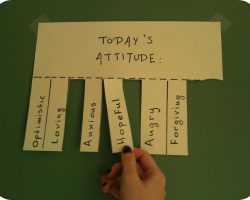

Getting the homesickness blues part 2

Photo by Flickr user Helga  Weber

Photo by Flickr user Helga Weber

This is the second part of an article exploring homesickness. In the first part I wrote about the experience of feeling homesick (how, when, what, why), the various effects and symptoms and my personal insight. In the second and third parts respectively, I will give more explicit suggestions and guidelines about dealing with homesickness which are based on my experience as an expat and a therapist.

Finding a balance between your life back home and your new life is essential. Homesickness can become a chance and a challenge to grow, to build something new, to find new meaning, to develop new support resources.

Each person experiences and deals with homesickness differently. How you adapt to new surroundings depends upon your emotional resilience (ability to adapt to stressful situations) and how well you are able to support yourself and utilize the support of your environment.
When your emotional resilience is not developed enough, you may find yourself lying in bed, depressed and at total war with your surroundings, resisting change and hating every minute of it, and above all feeling stuck and desperate like there is no alternative. When you are not able to fully support yourself and ask for support, you might withdraw from any friends or acquaintances, lose interest in your new social life, get more isolated, stop taking care of yourself and despite of all your suffering you might be reluctant to seek support.
If homesickness persists and starts to interfere with your daily life, it is a sign that perhaps something needs to change. If you want to improve the way you cope with homesickness and stressful situations, a first step of supporting and taking care of yourself is to seek professional help from a therapist.

How to embrace homesickness
Here are my suggestions and tips to support you in embracing homesickness and not letting it get the best of you.

Accept!

All expats at some point will feel homesick, it is normal as you adjust to your new location. Controlling or denying your feelings of homesickness will only make the situation worse. You might feel even more isolated and alone. Give space and time to yourself to accept feeling homesick, it is a very common experience among adult expats and even more among children expats. There is nothing to be ashamed or embarrassed of, when you become aware and accept homesickness, you can choose the necessary steps to deal with it more appropriately.

Reframe!

Of course you miss home, probably it is a great place with people who love and support you. Living in a new place will not necessarily be better than home, it is just different. Surely there will be stuff you don’t understand or agree with in your new surroundings. Also, seeing the new place as an idealized dream place where everything is peachy and should work like a clock will not get you anywhere. Accept the things you like and don’t like both in the new location and home. Stop comparing, it sucks the life out of you! Remember why you moved there in the first place. Find what is meaningful for you in your new surroundings. Is it exciting professional opportunities, better quality of life, a good university, the experience of living abroad, your partner? Reframe the way you see things.

Belong!

Put yourself out there and create a support network in your new surroundings. Making new friends is essential not to feel isolated. Get involved with people at work or where you study, in your neighbourhood, in church, anywhere where you can meet people in your everyday life.
Socialize with other expats and local people. Try finding other people from your country, check if there are shops, restaurants or meeting clubs where your fellow countrymen hang out.
Most likely you will get a lot of support from your countrymen and other expats who can give you advice, are going or have gone through the same experiences, understand how you feel and what you miss from home. You actually might end up having a few good friends. Become engaged in activities with others, it will give you a sense of belonging as well. Invest learning the language of the new country, even if it is just some basic words. The more you speak the language the more integrated you will feel.

Communicate!

Keep contact with your family and friends at home. There are so many ways to keep in touch: phone, email, facebook (social media in general), postal mail (for the last of the romantics), chat and my personal favorite Skype. It is nice to communicate with your loved ones at home but don’t overdo it! If you spend several hours each day locked in your house using skype, then you miss all the wonderful opportunities to build something in the new location.

Create familiarity!

Start building familiarity around you. Home is not just a physical space but also an emotional one. Make sure you have brought from your country some photos, your favorite books and cds, food or other objects to create “a home away from home”. Make your new home yours by decorating it according to your taste to feel cozy and comfortable. Your house is your sanctuary, it doesn’t matter in which country it is, it is your space. If you don’t invest the energy to make your space a place you look forward to live, it will feel temporary and it will make you feel homesick even more. Follow TV programs or the news from your country via internet or satellite TV. Find products from your country and invite your new friends for dinner cooking your country’s cuisine.
Establish routines to feel a sense of familiarity. A part of our identity lies in the things we do in our daily life: working, going to the gym, hobbies, going out, meeting friends…Simple things that we are used to doing, without which we may feel a little lost. Continue your existing routines, traditions and hobbies in your new location. Start doing (or redoing) anything that makes you feel grounded, safe and happy.

Explore!

Be a tourist and explore your surroundings even if you live there for years. Invest in learning about the local culture, visit the sites and attractions that your new location is famous for. Get tips from locals about places to visit or check on the web about places “off the beaten path”. Commit to visit one new place each week, try local cuisine and immerse yourself in the local culture. Make your own little discoveries whether it is finding the best coffee in town or where to repair your bike.

In the third and last part of these series of articles exploring homesickness, I will continue giving suggestions about how to deal with homesickness and also some tips about taking care of your physical and emotional health. Stay tuned!

by a.christidou Tags: , , , , , , | Leave a comment

Getting the homesick blues part 1

homesick 1

Ever had one of these days where you miss being understood or speaking your own language? Knowing how things work and how to deal with arising problems? Missing your family or close friends? Having negative thoughts about your new surroundings and comparing to how “wonderful” life was back home?  Struggling to adjust to a new reality and culture? Lacking motivation and interest? Wanting desperately to return home? Feeling depressed and alienated?

Sounds familiar? Being homesick is a longing for home or familiarity; a state of being that includes cognitive processes, complicated emotions and has even physical symptoms. Adjusting to a new environment, culture, language, work and/or study and new expectations is a challenge for almost all expats.

People like comfort and safety. Home is nice, even when it is not! Move away from your familiar surroundings and you will soon realize how many things you will miss. Homesickness is not only an overwhelming desire to go back, it is mostly about everything you left behind.

Van Tilburg, Vingerhoets & Van Heck define homesickness as “the commonly experienced state of distress among those who have left their house and home and find themselves in a new and unfamiliar environment”. Homesickness can manifest itself in various ways and it affects pretty much each person who makes the bold step of moving away from home or familiar surroundings. Whether it is a volunteer relocation as in the case of tourists, expatriates, migrant workers and students, or a forced relocation as in the case of forced migrants (think of people from crisis struck or poor countries) and refugees, whatever our story is and where we come from, we all get the homesick blues.

The effects and symptoms of homesickness on a cognitive, behavioural and emotional level are numerous affecting our daily life, our productivity and the relationship with our self and others:
Cognitive level:  constant thinking about home, negative thoughts about the new place, a tendency to idealize home, pessimistic thoughts, inadequacy and failure thoughts.
Behavioural level: changes in sleeping and eating patterns, poor concentration and focus, withdrawal and isolation, take refuge in comfort “resources” (alcohol, tobacco, drugs, shopping…) lack of control, tearfulness.
Emotional level: sadness, anxiety, loneliness, irritability, anger, jealousy, shame, feeling overwhelmed, insecurity, lack of motivation, mood swings, pain, poor self-confidence.

Physical level: researchers link homesickness to poor physical health: a prolonged period of experiencing homesickness –which is a big stressor- will weaken the immune system making you prone to a variety of physical symptoms (headache, cold, diarrhea, muscular tension…).
Functioning level: feeling homesick for a long time can lead to depression and issues regarding mental focus and memory, poor performance of tasks and lower productivity; that may result in losing your job or becoming unable to follow your studies.

In the beginning…
When you move abroad, you tend to deal with the challenges and stresses that accompany the relocation while armed with enthusiasm and optimism. You bear the obstacles and the difficulties with hope and patience. You may be excited and in awe of the new world that you are about to encounter. Adjusting seems to be going fine in terms of language, food, culture, new schedule, work or study, networking and making friends and then suddenly you feel homesick and wondering what is going on.

Reality bites
Once basic necessities and practicalities are covered, the excitement of the new country starts to wear off and your patience with all the problems, the unfamiliar situations and the cultural differences wears off as well, reality bites. You are still the same person living in a new place and dealing with the same issues and challenges but now you feel that something is missing, something doesn’t feel right.

Long-term expats are not immune either
Homesickness is not experienced only in the first months of relocation, it is very common among long-term expats. As an expat who has spent the last 11 years “away from home” I have moments where I miss my family, my friends and a bunch of things I love about my country. My clients have shared similar experiences with me and it is something common among most expats.

Homesickness explained
When our basic needs –often associated with home, family, friends, familiarity- such as support, love and security are not fulfilled within our new environment, we long for them and we long for home. Usually we feel homesick when things are difficult and in times of trouble, when in a bad mood or sick, during holiday season and various celebrations (Christmas, birthdays..), coming back from vacation…

Choose how you deal with it!
Being homesick is very okay, no one is immune to homesickness. What matters and makes a big difference is how you choose to deal with it: what coping skills and emotional resilience you have developed and what may still needs to be developed, what support resources you have available and which ones you are able to use. It is important to be aware of feeling homesick and not try to make it go away or pretend it is not there. It won’t work for the long run, I guarantee you that.
Give yourself time and space to accept where you are and how you feel, homesickness can also be an invitation to fruitful changes in your life. Be responsible and mature enough to seek support when you need it and invest in your personal development through therapy to develop coping skills and emotional resiliency.

by a.christidou Tags: , , , , , , | Leave a comment

IamExpat collaboration

iamexpat

Dear friends,

I wanted to let you know about my collaboration as a regular contributor with the IamExpat website. I will be writing about all things expats and psychotherapy-)
For April 2013 my articles will be published on the 10th, the 18th and the 25th.
Check my page in IamExpat for an overview of my articles: http://www.iamexpat.nl/community/contributors/AnastasiaChristidou
You can also find these articles here in my blog under the category iamexpat.

Please READ, SHARE, LIKE, LEAVE A COMMENT, I would love to hear some feedback from you-))

love and bliss
Anastasia

by a.christidou Leave a comment

Parent Effectiveness Training (P.E.T.)

parents training
• Would you like to improve your parenting skills?
• Are you having trouble communicating with your children?
• Are you looking for an alternative to your current parenting style?

P.E.T. is a specialized, evidence-based program designed to help you discover how improved communication can save you time, stress and energy by understanding what you and your children really need and solve problems more easily.
Many people believe parenting comes naturally but everyone faces difficulties at some point or another – from babies who won’t sleep at night and toddlers who throw tantrums, to unruly teenagers. Parenting can be complicated because every child is unique. Parents are often blamed but rarely trained on how to raise responsible and caring children.
Using P.E.T. will have immediate results: less fighting, fewer tantrums and lies, no need for punishment. Whether you have a toddler striking out for independence or a teenager who has already started rebelling, you will find P.E.T. a compassionate, effective way to instill responsibility and create a nurturing family environment in which your child will thrive.

P.E.T. CAN TEACH YOU HOW TO:
• Listen so children will feel understood (Active Listening)
• Talk so children will understand you (I-Messages)
• Resolve conflict in 6 steps (The No-Lose method)
• Avoid blocks in communication (Communication Roadblocks)
• Deal creatively with conflicts of values

P.E.T. History
Parent Effectiveness Training (P.E.T.) is the most researched, practical skills model for raising respectful, loving and responsible children of all ages. The P.E.T. program was created in 1962 by award winning psychologist and three-time Nobel Peace Prize nominee Dr. Thomas Gordon. P.E.T. is backed by over 50 years of research and is delivered in over 40 countries today. A major revision of the P.E.T. program was completed in 2006 with up-to-date examples, new content and much more.
Enroll in P.E.T and learn the skills and the strategies for effective parenting.

Course Structure/Duration
PET is an exciting 10-week course delivered as 10 three-hour sessions (with a break). Participants will learn and practice communication skills through: formal teaching, reading, exercises, group and individual practice and discussion. Participants are encouraged to learn throughout the course by practicing their skills at home.

Course Fees
250€ per person or 400€ per parenting couple inclusive course material. Each participant receives a workbook and the book “Parent Effectiveness Training- The Proven Program for Raising Responsible Children” by Dr. Thomas Gordon.

For more information contact me on info@anastasiachristidou.com

by a.christidou Tags: , , , , , , , , | Leave a comment

Emotions and physical health: what neuropeptides have to do with it?

Emotional state

Neuropeptides (nerve proteins) are chemicals that regulate almost all life processes of our cells and also the way all cells communicate with each other.  Peptides are tiny pieces of protein that are produced in the brain and throughout the whole body e.g. endorphins (our happy hormones), serotonin (our feel-good chemical), vasopressin (regulates blood pressure) and insulin (regulates metabolism and sugar). The discovery of neuropeptides opened the way to connect the processes of body and mind; “the chemicals that are running our body and our brain are the same chemicals that are involved in emotion” (C.Pert).

Our thoughts, our daily mood or emotional state have a big influence to our physical health. When we have a specific feeling, thought or drive, it affects our nervous system by using neuropeptides who carry the messages back and forth between mind and body. Neuropeptides –who link perception in the brain to the body and emotions- are constantly changing their configuration, reflecting changes in our emotional state throughout the day.
When our mental and emotional state is out of balance, neuropeptides will make physical symptoms to appear in the body.

Each emotion is associated with a particular neuropeptide, so if we have a tendency to experience a particular emotion, our cellular structure will be modified to accommodate more of the neuropeptide associated with that emotion.
Imagine what happens when you experience fear and anxiety on an everyday basis:
Stress makes the body react with a “fight-or-flight” response, releasing cortisol (stress hormone) and adrenaline that prepare systems throughout the body to deal with the danger. Stress hormones act by mobilizing energy from storage to muscles, increasing heart rate, blood pressure and breathing rate and shutting down metabolic processes such as digestion, reproduction, growth and immunity.
If the body stays in this alerted state too long, the chemicals (hormones, neuropeptides..) cause physical damage to several systems: everything from high blood pressure to problems with immune system, heart, memory, digestion, mood…

Our body is becoming stronger or weaker depending on our mental and emotional state. The body responds favorably to health-enhancing chemicals which have a tonic effect on all organs, releases brain endorphins and the muscles are relaxed.                     Health-enhancing chemicals are pleasant emotions, moods, thoughts, attitudes like hope, love, laughter, optimism, empathy, acceptance, joy, humour, inspiration, confidence etc.
Health-degrading emotions, moods, thoughts and attitudes like shame, guilt, apathy, fear, hate or anger release chemicals that deteriorate the immune system and other systems in the body, and also cause damage in various organs.

This doesn’t mean that you should avoid experiencing or expressing painful or unpleasant emotions -the so-called negative. All emotions are valid, they have their function and purpose e.g. anger can provide you the energy to defend yourself when someone has crossed your boundaries or it can motivate you to challenge interpersonal and social injustices.              It is all about KEEPING A BALANCE and let emotions work for you and not against you.
Any prolonged negative emotional and mental state will make areas in your body more prone to illness.
The interesting thing is that when physical symptoms appear, it means that you have been in that state for some time already or you may even no longer be in that state of being anymore.

Emotions play also a significant role in fulfilling your needs. If you ignore or you are not aware of your needs, or you suppress your emotions, your subconscious mind will find another way to pass you the message that something’s wrong: by alerting you with physical symptoms.                                           You need to find ways to express whatever emotions you feel. Candace Pert (who studies influences upon health at a neurochemical level) said that “repressing  emotions can only be causative of disease” because failure to find effective ways to express negative emotions causes you to “stew in your own juices” day  after day, and this chronic immersion in  negativity is what appears to produce harmful influences on health.
Again it is all about body and mind (psyche and soma) working together as a balanced and healthy WHOLE.

KEYPOINT: There is a strong link between emotional and mental states and the neurochemical changes they produce in the body. Emotions can have positive or negative effects on the body. A prolonged negative mental state (suppressing emotions and needs or experiencing only painful emotions) will appear in the form of physical symptoms or illness.     You might wanna try to find healthy and creative ways of expressing your emotions, keep an upbeat frame of mind when dealing with daily problems, support yourself and ask for support to cope creatively with stress and painful emotions. Make sure that your daily emotional state supports your health instead of working against it!


by a.christidou Tags: , , , , , , , , | Leave a comment

Six problems of human communication

communication problems

1. Words are imprecise vehicles of communication
Often what we experience do not fit into words and sentences very well, we are not able to say precisely what we mean. Words have different meaning for different people.

2. Guessing the meaning of the speaker’s “code”
People often code their messages so their real meaning is masked. When we are ambivalent about expressing ourselves (a part of us wants to be known and another to be hidden) we speak obscurely. We can also code our messages without trying, after all we have been training from early childhood to express ourselves indirectly (e.g. kids ask questions in bedtime when they just want company).
Decoding is always guesswork. We can hear a person’s words, we can observe his actions but we can only conclude what the words/actions mean. A person’s behavior is observable (phenomenology), a person’s thoughts are not directly observable (only clues are her words and actions), feelings are even more concealed.

HOW  MEANTHOW  SENTHOW RECEIVED
Speaker’s thoughts and feelings: private, known only to the speaker)Speaker’s actions/words: often imprecise/masked expressions of his thoughts/feelings or attempts at concealmentListener’s interpretation of the meaning behind the speaker’s actions/words: private, known only to the listener

Figure 1. The inexactness of the communication process

3. The presenting topic may not be the major issue
Each person conceals much of himself from others. Everyone travels incognito to some degree. This can result in the speaker talking about one topic while avoiding to speak about something more important or simply she doesn’t come directly to the point.

4. The speaker may be blind to her emotions of blinded by them.
Our culture teaches people to repress their feelings. On the one hand people are often unaware of their emotions (blind to our emotions) and on the other hand feelings come out with such intensity that they control us (blinded by our emotions) and we can behave in destructive for us/others ways.
Our emotions help shape our values. They are a fundamental part of our motivation and help determine our direction and purpose in life. Emotions provide us with needed clues for solving our problems and also relate to others. Reflective responses help children and adults become aware of their inner world of emotion e.g.“it looks as though you are very angry”.
When a person has a chance to talk about intense feelings to an empathic listener, the likelihood of acting irrationally/destructively on those feelings is diminished.

5. Many listeners are easily distracted
The listener begins to listen the speaker with interest, the listener’s mind might get bored with the slow pace of conversation and take a mental vacation while the speaker is talking and still get the message. She checks back with the speaker from time to time and makes appropriate remarks but spends most of the time with her own thoughts.

6. Filters distort what the listener hears
Everyone has few emotional filters that block or distort messages sent to us. Modern people have to develop a self-protective mechanism to defend themselves from the constant acoustical bombardment of 21st century living. The mechanism protects us and also keeps us away from many things.
Filters also develop when parents, teachers or other adults…may have coupled words e.g. hospital, death, immigrant, cop, anger, work, money, marriage…with pleasant or unpleasant feelings. When such conditioning takes place the child reacts to the words emotionally.
Our expectations of others constitute another set of filters through which we listen. A person’s self-image may distort the reception of the speaker’s thoughts and feelings. Someone with low self-esteem may expect criticism from others and read that meaning into the most innocent statements.

KEYPOINT!! Since it ‘s so difficult for people to say precisely what is on their minds and in their hearts and since it ‘s so hard to listen without distraction or distortion to what others are saying, we need to check for accuracy in our conversations. To do this, the effective listener frequently reflects back the essence of what he has heard as a check that his understanding match the speaker’s meanings.


by a.christidou Tags: , , , , | Leave a comment

Creative Communication workshop, 28th of April 2012

Although interpersonal communication is humanity’s greatest achievement, the average person is having difficulty in communicating well

CREATIVE COMMUNICATION is a one-day workshop to help you discover creative ways of understanding and improving your communication with others

Communication is the lifeblood of every personal and working relationship. Each person grows through enhancing dialogues with others. Our personality development, mental and physical health are linked to the quality of our communication.

Research studies indicate that people of all ages can learn specific communication skills that lead to fulfilling interpersonal relationships and increased vocational competence. It is essential to discover creative ways that will help us develop and maintain a strong positive connection with our friends, family and co-workers.

Four clusters of skills critical to effective communication are taught in the workshop:

Assertion skills: these skills enable you to maintain respect, satisfy your needs and defend your rights without controlling or manipulating others

Active listening skills: they enable you to really understand what another person is saying and involve new ways of responding so that the other person feels understood

Reading body language skills: understanding body language can help you respond better to non verbal signs and improve your understanding of others

Conflict – management skills: these abilities enable you to deal with the emotional turbulence that typically accompanies conflict

The workshop is practical oriented with a lot of exercises in small groups and demonstrations with the facilitators. Proven concepts of Gestalt Therapy will be used to assist the participants in their day – to – day environment and they will be given the possibility to inquire for more personal assistance if needed after the workshop. All participants will receive handouts, guidelines and copies of material presented or used during the training course.

Practical information
Date:                  28 April 2012
Working hours:    10:00 – 17:00
Language:            English
Costs:                  50€ per person, 40€ for students
(including coffee, tea & cookies)
Venue:                 Life in an invitation Centre,
Mathenesserlaan 185, 3014HA Rotterdam
Info & Registration:        info@anastasiachristidou.com,
Tel.: 0641674280

Ioanna Rizou studied Psychology in Aristotle University of Thessaloniki and continued her studies in Economics obtaining a Master Degree in Business Administration. She worked in the private sector as career counsellor for four years and continued her training as Gestalt Therapist.
She also has a dissertation on Gestalt in organizations, where she used the principles of Gestalt Therapy in helping companies achieve organization development through enhancing their communication skills, their awareness and the way they handle change management process on all levels.
From September 2011 she works as a gestalt practitioner in her private practice in Athens where she facilitates individual and group sessions on several issues like stress and time management, self awareness, relational issues, vocational guidance, social skills and life changing issues. The approaches she uses are those of Gestalt Therapy and Acceptance and Commitment therapy (ACT). These are both humanistic approaches based on the perception that the individuals are able to create new and healthy ways of creating their experience leaving behind all their unhealthy habits and leading to a new way of living according to their needs and values.

Anastasia Christidou studied Counselling and after obtaining her BA in Integrative Counselling from Middlesex University (London, UK) she continued her studies in Psychotherapy by following a 4-year specialization in Gestalt Therapy. She advanced her studies by furthermore training in Crisis Intervention, Communication in the family (Parent Effectiveness Training), Mindfulness Meditation, Stress Management and Relaxation Techniques.
Anastasia worked as a professional cellist for 12 years and obtained as a first degree a BA in Music Performance from CODARTS University for the Arts (Rotterdam, the Netherlands) before choosing to become a full time psychotherapist.
Anastasia has been in private practice since 2008 working with adult expats, couples and multicultural populations in areas such as social skills, life changes, identity issues, stress, emotional intelligence and expat cultural adjustments. In 2010 she joined the team of “Life is an invitation centre” a group practice of Gestalt therapists based in Rotterdam. She has a special interest in creative modalities such as art, music, theatre and employs the use of mindfulness in her practice.
Her main therapeutic base is Gestalt Therapy and she integrates ideas, concepts and methods drawn from various psychotherapy modalities in order to respond appropriately to the needs of each person. She is a registered member of the Dutch Association for Counselling (NAC) and European Association for Counselling (EAC).


by a.christidou Tags: , , , , | Leave a comment

How can awareness help us live in the moment

Awareness is a form of experience that can be defined as being in touch with one’s own existence. It involves allowing yourself to be where you already are and to become familiar with your own actual experience moment by moment. Socrates was famous in ancient Athens for saying “Know thyself”. I am not implying that all our problems will magically disappear if we develop awareness. Rather it is that all life’s problems can be seen clearly through the lens of a clear mind. When we start to be more aware, we are simply in the moment, using all our senses to perceive, to learn, to act, to change and to heal. This is why moment to moment awareness is so precious. We may have to teach ourselves how to do it through practicing, but our lives become more real and fulfilling.

Are we really aware?

How can we not be aware…? What we don’t realize is that our awareness is only a fraction of “what is” at every moment. It takes will and effort to remain in a state of full awareness.
*I invite you to a little experiment to experience firsthand the state of your awareness:
Take a walk, like for example walking home from work (driving will also do!) and observe what happens. Are you walking in a hurry? Are you busy thinking what you will cook for dinner? Are you thinking about your job or your boss? Are you aware of people, cars, buildings, images, smells…?

After the completion of the experiment, reflect on how much or how little were you aware of yourself within your environment. Good luck!

Why awareness is so important?

You might ask yourself, so what if I haven’t develop awareness? So what if I am unaware of what I am experiencing? Here‘s the thing:
Unawareness can keep us from being in touch with our needs, feelings, sensations, our body and its signals. Unawareness can dominate the mind, we end up functioning mechanically “on autopilot” and all our decisions and actions are affected by it. Imagine if you are working hard without being aware of your need to rest, tiredness will take its toll on you, at the end you will have a burn out or become physically ill. When the mind is dictated by unawareness and dissatisfaction, it is difficult to feel calm and relaxed. This state of mind affects also our ability to see situations clearly. A chronic state of unawareness can cause us to miss beautiful experiences in our lives and it can create physical problems for us (problems we are not even aware that we generate ourselves).

Awareness is the cornerstone and primary purpose of Gestalt therapy. Awareness of being and doing requires only that we pay attention and see things as they are.
When we are aware of our thoughts, feelings, body sensations and needs, we stay true to ourselves, we have access to a greater potential and more choices are available to us, we take responsibility and step forward into a deeply satisfying and creative life.


by a.christidou Tags: , , , | Leave a comment

Living in the moment

Living in the moment…accepting what is, accepting who you are…how hard can it be?

Being aware of each moment may sound simple but I assure you it is challenging, the distractions are far too many…Even if you try to concentrate on something, you might find it difficult to be in the present for too long. Our mind tends to wander, it drifts easily to thoughts about the past or the future. Our thoughts can be quite distressing and overwhelming especially in times of crisis and emotional turmoil, they can easily cloud our awareness of the present.

If you start paying attention to where your mind wanders throughout the day, you will probably realize that you spend extensive amounts of time and energy on worrying, making plans for the future, anticipating what you want or don’t want to happen, daydreaming, clinging to memories and all sorts of things that deprive you from being in the present. The inner busyness of our mind is constant…Something attracts the attention of the mind, we follow it and get distracted, and as a consequence we may be only partially aware of what is actually happening in the present. We are literally lost in our thoughts and unaware of other sense impressions.

*I invite you to a little experiment to experience firsthand the busyness of your inner mind:
Close your eyes, sit with your back relatively straight but not stiff, and become aware of your breathing. Just observe your breathing, don’t try to control or change it. Let it happen, be aware of the flow of your breath. Try this experiment for 3 minutes.
If at some point you think it is boring or stupid to sit and watch yourself breathing, note to yourself that this is just a thought/judgment your mind is creating. Gently bring back your attention to your breathing.

After the completion of the experiment, reflect on how you felt during it and how much or how little your mind wandered away from your breathing. Good luck!


by a.christidou Tags: , , | Leave a comment

A suggestion for married couples by the poet K.Gibran

This is a fragment taken from the book “The Prophet” written by Khalil Gibran (1883-1931), a Lebanese poet, philosopher and artist.  It ‘s an inspiring suggestion on how to grow through relationship and marriage.                        The poet compares the couple with the two pillars of a temple. In order for the temple to exist (the relationship), it ‘s necessary that the pillars stand together yet with a distance, if the pillars of the temple stand too close, the temple will fall apart. Just as in a couple, there should be space for each person to grow as an independent entity and at the same time, both partners exist as a union of WE.

The Prophet, who has lived in a foreign city for twelve years, is about to board a ship that will take him back home. At the moment of his departure, he wishes to offer the people gifts but possesses nothing. The people gather round, each asks a question about the mysteries of life and the man’s wisdom is his gift.
Here’s what the Prophet says about marriage.

You were born together,
and together you shall be forevermore.

You shall be together when the white wings
of death scatter your days.

Aye, you shall be together even in the
silent memory of God.

But let there be spaces in your togetherness,
And let the winds of the heavens dance between you.

Love one another, but make not a bond of love.
Let it rather be a moving sea between
the shores of your souls.

Fill each other’s cup but drink not from one cup.
Give one another of your bread but eat not from the same loaf.

Sing and dance together and be joyous,
but let each of you be alone,

Even as the strings of a lute are alone
though they quiver with the same music.

Give your hearts, but not into each other’s keeping.
For only the hand of Life can contain your hearts.

And stand together, yet not too near together.
For the pillars of the temple stand apart,

And the oak tree and the cypress
grow not in each other’s shadow.


by a.christidou Tags: , , , , , | 2 Comments